Seven reels of unalloyed joy!
A lost film. Teddy Drake is a pleasure-seeking aristocrat who ends up expelled from his exclusive Fifth Avenue club for playing practical jokes and other rambunctious antics. He decides to reform his selfish ways and boards a train heading heading for the Southwest.
Manual Lopez
The film's tagline is: "Seven reels of unalloyed joy!"
The production budget was $264.0.
The film was directed by Albert Parker.
Cinematography was handled by Hugh McClung.
This title is listed on IMDb as tt0010331.

1919
Spinster sisters Sophronia and Angelica Pennington of Massachusetts refuse to meet Dolores, the bride of their nephew Jack, because she formerly was an actress. After Dolores receives word that Jack died at the front in France, she moves in with Gloria Grey, who barely supports herself by giving singing lessons. Soon Gloria's money dwindles and her creditors become threatening. When Dolores learns that she will inherit $5,000 from Jack's estate, she refuses to accept it out of pride, but Gloria convinces Dolores that they should go to Pennington Manor with their identities switched. Gloria impresses the aunts when she says that her godmother is a duchess. She and Jack's brother Steven fall in love, and when he is notified to report to naval duty, he proposes that they marry immediately. They then learn that Jack is alive. When Jack finds out that his wife was about to marry his brother, he starts to leave brokenhearted, but he sees the real Dolores and matters are straightened out.

1921
Pearl White is a child living alone on a South Seas island after the death of her missionary father. By a stroke of luck, she becomes an heiress, and is transplanted into modern society.

1921
Passing Through is a 1921 American silent comedy drama film, directed by William A. Seiter and written by Agnes Christine Johnston, and Joseph F. Poland.

1921
Thinking it is a worthless trinket, Dorothy trades her husband’s prized Aztec idol to a street peddler in exchange for a beautiful silk shawl. She soon discovers the idol is actually an extremely valuable artifact. Desperate to retrieve it before her husband notices, she learns that it has already been purchased by their neighbor, an artist named Cambridge. Dorothy enters Cambridge’s apartment to recover the idol secretly. Her efforts lead to a series of comedic misunderstandings and frantic situations as she tries to protect her marriage and her husband's property.

1915
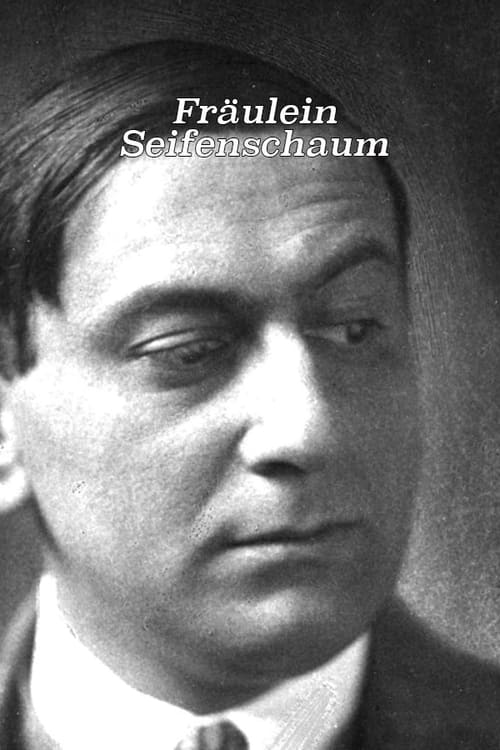
Fräulein Seifenschaum is a German silent film by Ernst Lubitsch from 1915. It is considered Lubitsch's first directorial work and is one of the director's lost works. With the outbreak of World War I , all the men, including the barbers , are drafted. As a result, the women have to take over their work, and so mother and daughter share the work in a barber's shop: the daughter soaps the customers, while the mother then more or less skilfully shaves the men. A customer named Ernst also wants to be shaved. He makes eyes at the daughter and is resolutely thrown out of the shop by his mother. Ernst flees with his great love in the car and is followed by his mother on foot and finally on a tricycle.

1911
Harry Burton's sister and her husband are suddenly called away for a few days on business and telegraph him to come to their home and take care of their two little boys, "Toddie and Budge." He at once complies, and is soon with the children, assuming his duties as "governor." Helen Manton, stopping in the same town, thinks a great deal of Harry Burton, and naturally he of her.
1938

1912
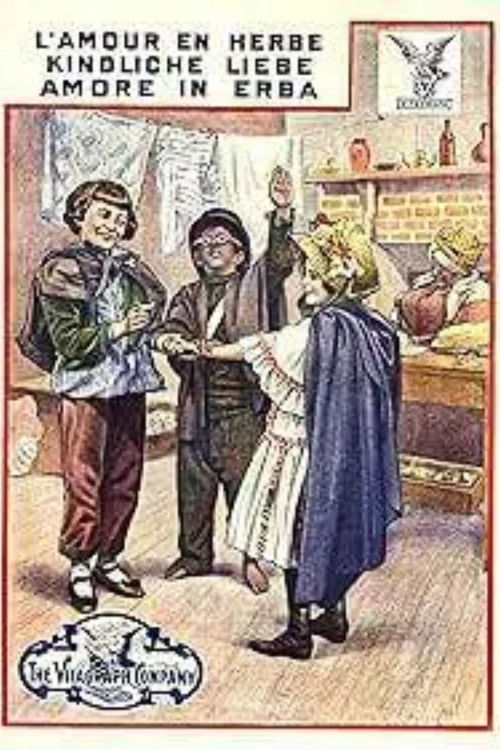
Two little children, who think themselves very much in love with each other, imbued with the ideas of their elders, plan a romantic marriage. Alvin Strong, the boy, confides his intentions to the family's servant, Jaspar. Alvin arranges with Jane, his sweetheart, to elope in the usual way, through a window, with the assistance of a ladder.

1914
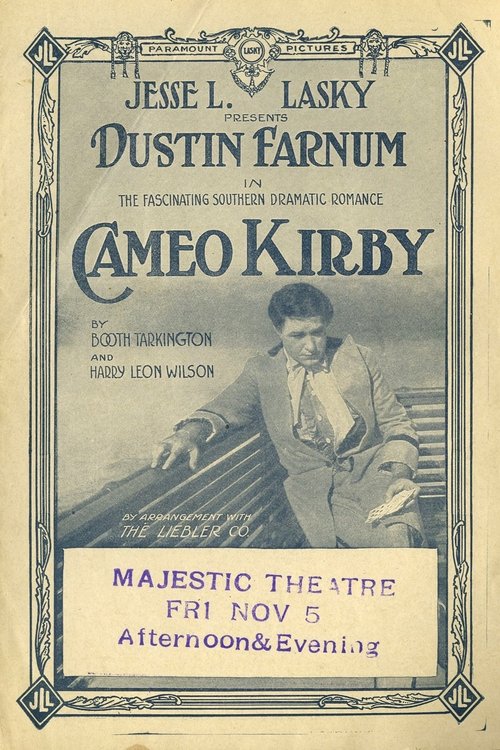
Cameo Kirby is a 1914 American drama silent film directed by Oscar Apfel and written by Clara Beranger and William C. deMille. The film stars Dustin Farnum, Fred Montague, James Neill, Jode Mullally, Winifred Kingston and Dick La Reno. It is based on the play Cameo Kirby by Booth Tarkington and Harry Leon Wilson. The film was released on December 24, 1914, by Paramount Pictures.
Good
2 votes
The Knickerbocker Buckaroo
Released
NR
No Language
United States of America
$264