The film "Pilecki" is a fictionalized documentary depicting the story of Witold Pilecki, from his youth through action during World War II, up to the imprisonment and death in May 1948.
The runtime is 80 minutes (1h 20m).
The film was directed by Mirosław Krzyszkowski.
The screenplay was written by Mirosław Krzyszkowski and Bogdan Wasztyl.
The score was composed by Paweł Stankiewicz.
This title is listed on IMDb as tt5145444.
2008
In March 1943, twenty-year-old Ovadia Baruch was deported together with his family from Greece to Auschwitz-Birkenau. Upon arrival, his extended family was sent to the gas chambers. Ovadia struggled to survive until his liberation from the Mauthausen concentration camp in May 1945. While in Auschwitz, Ovadia met Aliza Tzarfati, a young Jewish woman from his hometown, and the two developed a loving relationship despite inhuman conditions. This film depicts their remarkable, touching story of love and survival in Auschwitz, a miraculous meeting after the Holocaust and the home they built together in Israel. This film is part of the "Witnesses and Education" project, a joint production of the International School for Holocaust Studies and the Multimedia Center of the Hebrew University of Jerusalem. In this series, survivors recount their life stores - before, during and after the Holocaust. Each title is filmed on location, where the events originally transpired.

2014
In the aftermath of WWII, German-Jewish cabaret singer Nelly has to undergo facial reconstructive surgery following her survival from Auschwitz. Without recognising Nelly, her former husband Johnny asks her to help him claim his wife’s inheritance. To see if he's betrayed her, she agrees, becoming her own doppelgänger.

1981
In 1939, Charlotte Salomon leaves Berlin to seek refuge at her grandparents' villa in the south of France. A little later, war breaks out, and Charlotte must, besides forgetting all she left behind, deal with her grandmother's depression, and her mother's suicide. To fight despair, Charlotte starts to paint, producing over one thousand images. "Is my life real, or is it theater?" This is the title she gives her body of work, which highlights her former life in Berlin. She finds herself though her art, but in 1943 is deported to Germany and Auschwitz.

1993
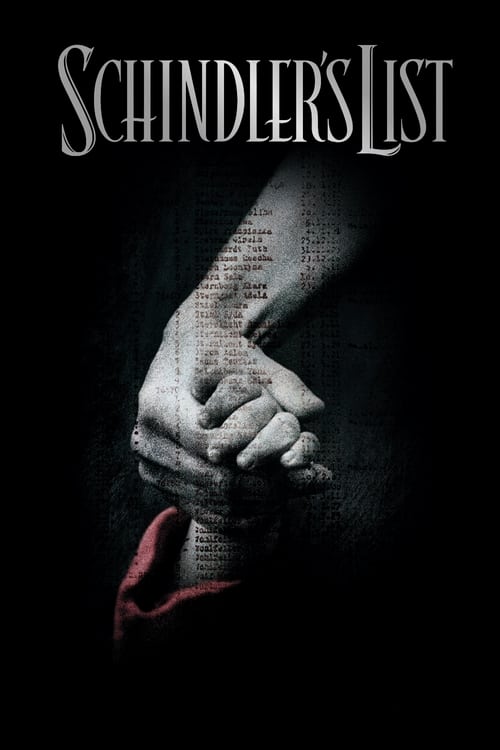
The true story of how businessman Oskar Schindler saved over a thousand Jewish lives from the Nazis while they worked as slaves in his factory during World War II.

2005
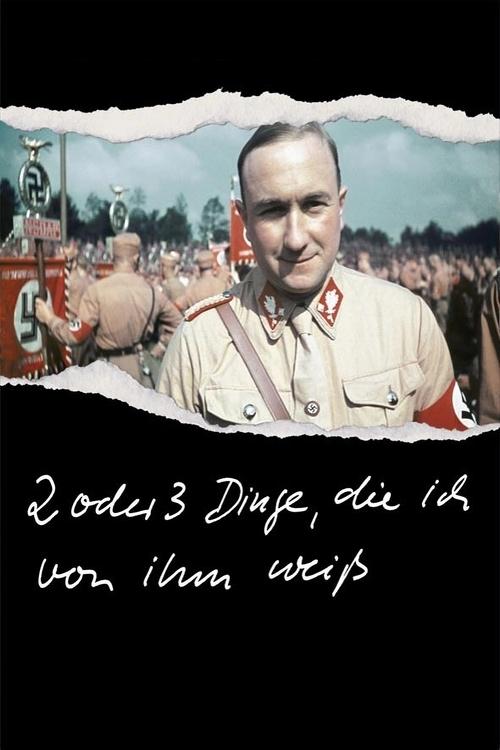
What would your family reminiscences about dad sound like if he had been an early supporter of Hitler’s, a leader of the notorious SA and the Third Reich’s minister in charge of Slovakia, including its Final Solution? Executed as a war criminal in 1947, Hanns Ludin left behind a grieving widow and six young children, the youngest of whom became a filmmaker. It's a fascinating, maddening, sometimes even humorous look at what the director calls "a typical German story." (Film Forum)

1956
Filmmaker Alain Resnais documents the atrocities behind the walls of Hitler's concentration camps.

2019
Caroline Sturdy Colls, a world leader in the forensic investigation of Nazi crime scenes, is chasing clues to an unsolved case: a concentration camp that existed on the British island of Alderney. Witnesses and survivors claimed that thousands died there, but only 389 bodies have ever been found. Under heavy restrictions imposed by the local government, which may not want its buried secrets revealed, Colls must uncover the truth using revolutionary techniques and technologies.

1986
This chilling, vitally important documentary was produced to mark the 40th anniversary of the liberation of Auschwitz Concentration Camp. The film contains unedited, previously unavailable film footage of Auschwitz shot by the Soviet military forces between January 27 and February 28, 1945 and includes an interview with Alexander Voronsov, the cameraman who shot the footage. The horrifying images include: survivors; camp visit by Soviet investigation commission; criminal experiments; forced laborers; evacuation of ill and weak prisoners with the aid of Russian and Polish volunteers; aerial photos of the IG Farben Works in Monowitz; and pictures of local people cleaning up the camp under Soviet supervision. - Written by National Center for Jewish Film

2007
Sven arrives in nowadays Auschwitz to do his civil service at the memorial. He encounters unfriendliness, especially by Stanislaw Krzeminski, the 85 year old KZ-survivor, and Krzysztof Lanuszewski, brother of his early love affair Ania. Even his boss Herold, the places manager, does little to help Sven familiarize. But when problems accumulate Sven realises that he already has become involved.
Mixed
5 votes
Pilecki
Released
Polski
Poland